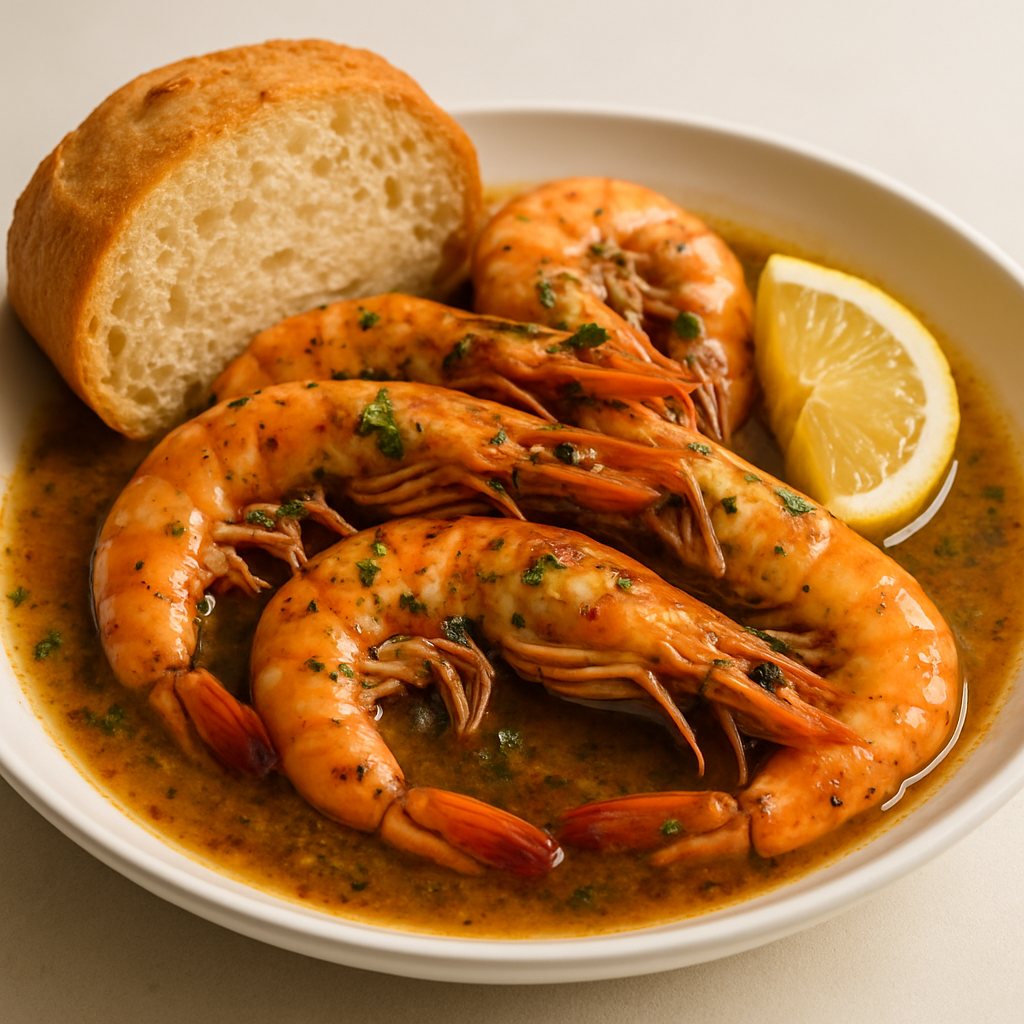
A Recipe Sealed in a Dream
The story goes that in the early 1980s, a young airman—let's call him Frank—was stationed at a base in North Dakota, where the winters bit hard and the nights stretched long. He was homesick, underpaid, and nowhere near the Gulf Coast. But Frank had found something precious in the base library: a glossy cookbook celebrating the restaurants and chefs of New Orleans. He devoured it the way a man in the desert drinks water.
One page stopped him cold. There, photographed in burnished gold light, was a cast-iron skillet brimming with shrimp so plump they seemed to glow, suspended in a sauce that looked less like food and more like liquid silk. The recipe came from Mr. B's Bistro, one of the Quarter's most storied kitchens. The dish was called Barbecue Shrimp—not smoked, not grilled, but a New Orleans creation built on butter, Worcestershire, and mystery.
Frank copied the recipe into a notebook. On an enlisted man's salary, a pilgrimage to New Orleans was a fairy tale. But he could make this. He would make this. If he couldn't go to Mr. B's, he'd bring Mr. B's to his small kitchen in the snow.
The Foundation: Butter as Doctrine
This dish rests on a principle that might seem simple until you're standing at the stove: butter is not a minor player here. It's the very soul of the sauce. Frank learned this through trial and error, through burned batches and salty mistakes.
The magic lives in the ratio and technique. You start with just 4 tablespoons of butter to kiss the garlic awake—a quick sauté that fills the kitchen with that nutty, blooming fragrance. The shrimp hit the pan for a brief, fierce sear: 2 minutes per side. This is not a gentle braise; it's a sear. You want the shrimp to take on color, to develop that slight crust that speaks of heat and attention.
Then comes the spice layer: a blend of paprika, cayenne, black pepper, salt, thyme, oregano, and red pepper flakes—each one measured and combined ahead of time, so when you sprinkle it over the shrimp, it coats evenly and awakens the whole dish at once.
Where the Sauce Becomes Silk
Here's where Frank's kitchen technique mattered most. The Worcestershire and hot sauce go in next—a cup and a half of concentrated, funky, spiced liquid that seems wrong until the remaining butter arrives.
And that butter—a full pound, cut into cubes—transforms everything. This is emulsification, though Frank didn't know the fancy word for it. He just knew that if you whisked those cubes in slowly, a few at a time, over medium heat, the sauce went from thin and separate to creamy and clinging, coating each shrimp like a glove.
The sensory cues matter here: If you rush, if you turn the heat too high, the sauce will break—the butter will separate and float in greasy islands. You'll see it happen and know you've gone wrong. So you slow down. You watch. You whisk each addition until it dissolves into the whole before adding the next. It takes patience, the same patience that sustained Frank through years of longing.
The bay leaves steep quietly in the background. The lemon juice, squeezed fresh at the very end, cuts through the richness with a clean, bright note. Two more minutes of gentle cooking at medium heat, and the shrimp turn completely opaque—the final sign that they're done, that all the collagen has set, that they've gone from raw to perfect.
The Lesson of 30 Years
Frank made this dish dozens of times in that cold North Dakota kitchen. He refined it. He learned when the shrimp were done by their firmness, not a clock. He mastered the butter whisking. He understood that the bread—crusty, greedily soaking up every drop of sauce—was as essential as any ingredient on the page.
Years passed. Frank left the Air Force. He built a career, a life, a family. And one day, when success had finally softened the sharp edges of his earlier years, he stood in the door of Mr. B's Bistro in the French Quarter.
He ordered the Barbecue Shrimp.
When it arrived—that same skillet, those same plump shrimp, that same silk of butter and spice and Worcestershire—he took one bite and something in his chest unclenched. It was exactly as he'd been making it. The restaurant's version was not a correction or an improvement. It was a confirmation.
The airman in the frozen North had understood the recipe so completely, had made it with such care and attention, that he'd intuited the true thing across a thousand miles and three decades. Sometimes, the lesson of cooking isn't that you need to visit fancy restaurants. Sometimes it's that if you pay attention—really pay attention—you can become your own authority.
Cooking This Right
When you make this, remember Frank's lesson: don't rush the butter stage. This is where patience transforms luxury into sauce. Pat your shrimp dry before they hit the pan so they sear, not steam. Taste the sauce before serving and adjust the hot sauce or Worcestershire to your own heat tolerance—this is where the dish becomes yours.
Serve it hot, immediately, with that crusty bread standing ready. Watch your guests forget their manners as they sop every drop from the pan. That's when you'll know you've got it right.
Ready to cook it? View the full recipe with step-by-step instructions — and let Mise, your AI sous chef, plan it into your week.