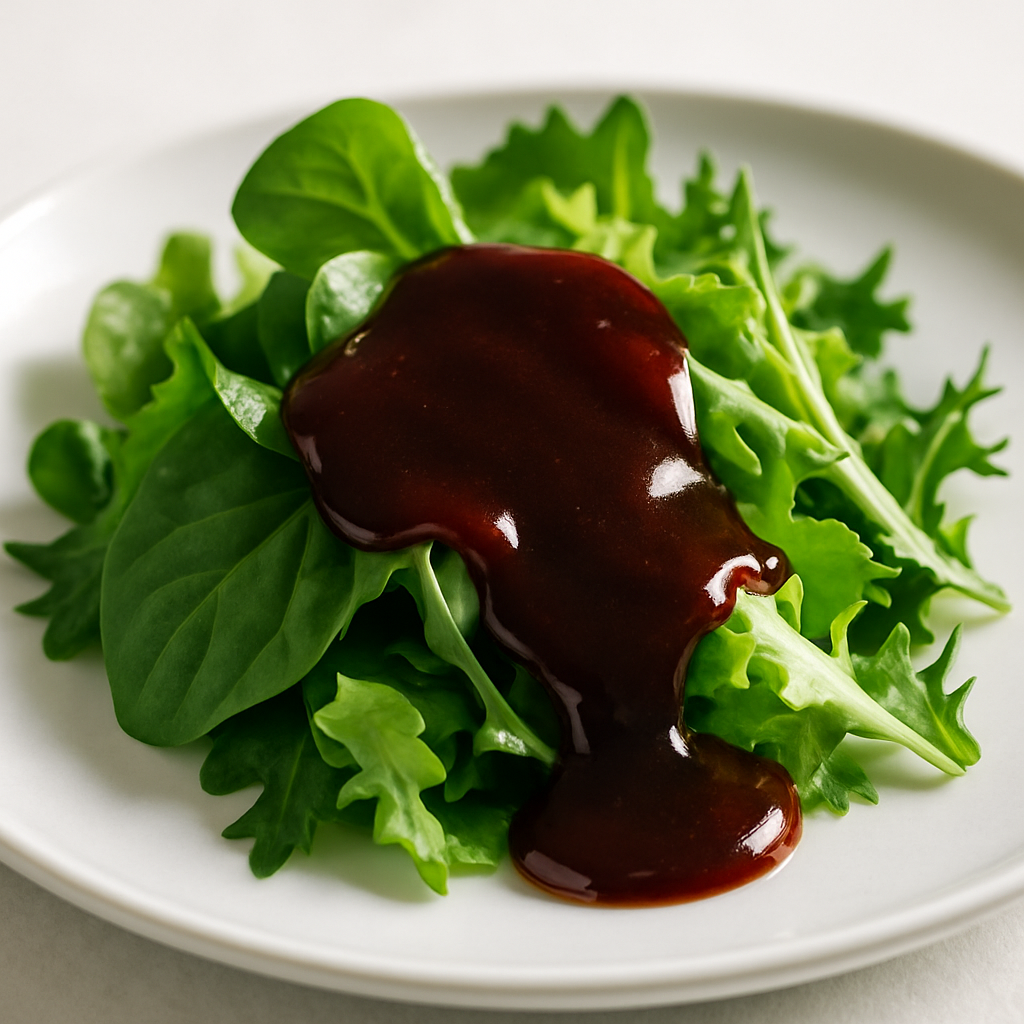
A Vinaigrette for Every Plate
A proper vinaigrette is one of the most useful skills in cooking—and one of the most rewarding to master. This Italian balsamic version is a textbook example of how a few quality ingredients and a solid technique can create something far greater than the sum of its parts. It's the kind of dressing that elevates a simple bowl of greens, coats warm roasted vegetables with glossy appeal, and cuts through the richness of grilled meat or fish with just the right amount of tang and sweetness.
What makes this vinaigrette so versatile is its balance. Balsamic vinegar brings dark, complex acidity and natural sweetness; Dijon mustard acts as both flavoring and emulsifier; honey adds a whisper of sweetness to round out the sharp edges; and Italian seasoning ties it all together with herbal warmth. It's a formula that works because each ingredient earns its place.
The Emulsion: Where the Magic Happens
The real technique here isn't complicated, but it matters. You're building an emulsion—a stable suspension of oil in vinegar. Without proper technique, your vinaigrette will separate, and you'll have a slick of oil floating on top of vinegar.
Here's what's working for you:
- Dijon mustard is your secret weapon. It contains natural emulsifiers that help oil and vinegar stay together. Don't skip it or substitute with yellow mustard—the difference is real.
- Garlic and the acidic base (balsamic vinegar, mustard) are whisked together first. This builds flavor and creates the foundation that oil will cling to.
- The slow drizzle. This is the moment that separates a home cook from someone in control. You're adding oil in a thin stream while whisking constantly—this allows each tiny droplet to be surrounded by the vinegar mixture before the next drop arrives. Rush it, and you'll break the emulsion.
Getting It Right
When you're whisking, listen to the sound. At first, you'll hear a quiet, almost loose sound—that's the acid base waiting for oil. As the emulsion builds, the sound becomes thicker, richer, almost creamy. That's your signal that you're on the right track.
After about a minute of continuous whisking, your vinaigrette should look noticeably thicker and more cohesive than when you started. It won't be mayonnaise-thick, but it should cling to a spoon and coat greens evenly instead of pooling at the bottom of the bowl.
Watch for these sensory cues:
- Glossy and uniform in color: The emulsion should be opaque or at least translucent, not separated into distinct layers.
- Coats the back of a spoon: Dip a clean spoon in—the vinaigrette should cling for a moment before slowly sliding off.
- Tastes balanced: Acidic, yes, but with a gentle sweetness underneath. If it tastes sharp, add a touch more honey. If it feels flat, a pinch more salt wakes everything up.
Common Pitfalls and How to Avoid Them
The emulsion broke. This usually happens when oil is added too quickly or the whisking stops. If it happens, start over with a fresh bowl, a teaspoon of mustard, and a splash of vinegar. Slowly whisk in your broken vinaigrette. You've just emulsified it again.
It tastes too sour. Balsamic vinegar is acidic, and a quarter cup is assertive. The honey here is modest—just a half teaspoon. It's meant to round the edges, not sweeten the dressing. If your balsamic is particularly aggressive, add honey in small increments and taste as you go. A quarter teaspoon more might be all you need.
The seasoning feels muted. Salt and pepper behave differently in an emulsion than they do in clear liquid. They dissolve into the acid base first, so you taste them more clearly. Still, if the dressing feels flat after tasting, add salt in small pinches—a little goes a long way.
Storage and the Beauty of Simplicity
Once emulsified and stored in a glass jar in the refrigerator, this vinaigrette will keep for up to two weeks. You may notice it separates slightly over time—that's completely normal and not a sign of failure. A quick shake or a few seconds of whisking brings it right back together.
The real beauty of making your own vinaigrette is that you control the quality of every ingredient. Extra virgin olive oil, real balsamic vinegar, and a fresh garlic clove taste fundamentally different from supermarket salad-in-a-bottle. Once you taste the difference, you won't go back.
Serving Thoughts
Use this on soft lettuces and bitter greens alike. Drizzle it over warm roasted Brussels sprouts or carrots—the warmth helps the flavors bloom. Spoon it over grilled chicken or fish. It's equally at home in a simple summer salad as it is dressed over hearty root vegetables in winter.
This vinaigrette is proof that technique doesn't have to be fussy—it just has to be intentional. Five minutes with a whisk, and you've made something better than almost anything you can buy.
Ready to cook it? View the full recipe with step-by-step instructions — and let Mise, your AI sous chef, plan it into your week.