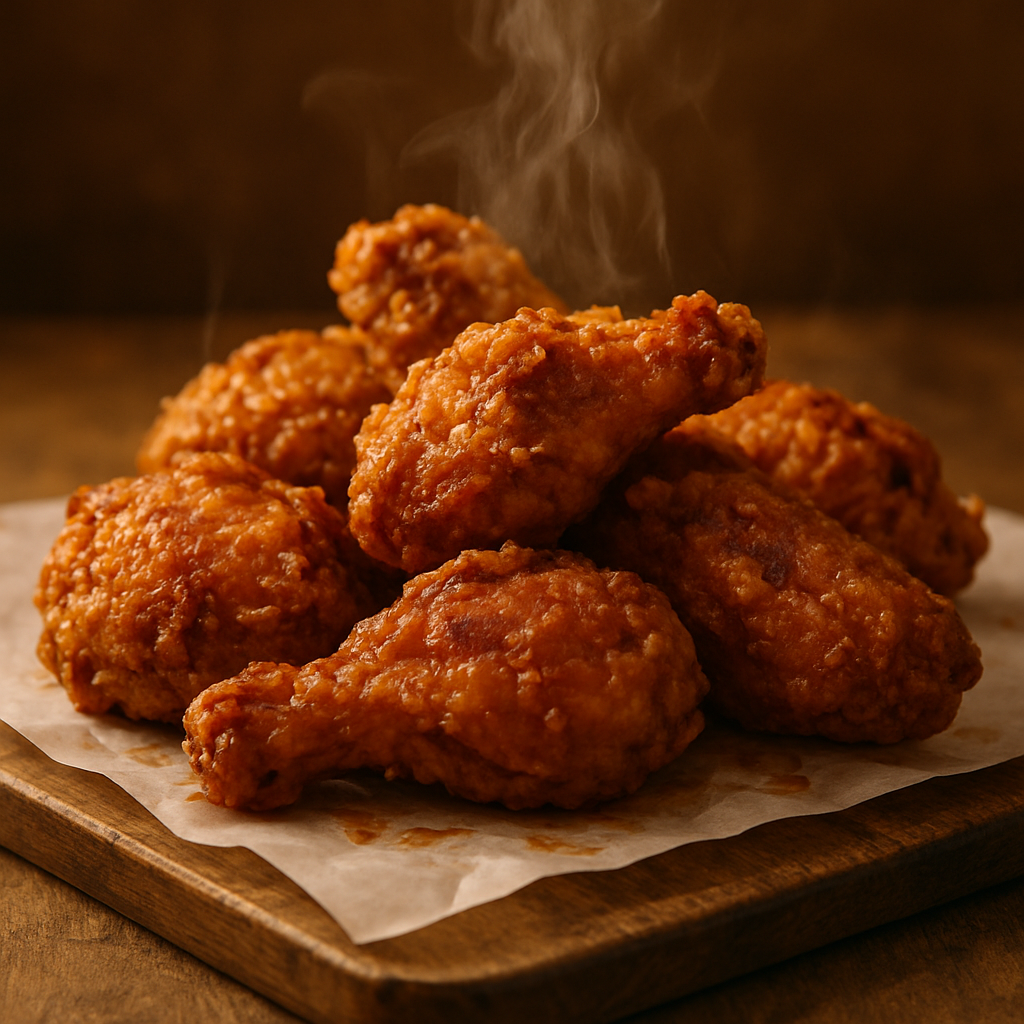
A Recipe Born from Restless Hands
The story goes that sometime in the 1970s, a mother in Lancaster County stood at her cast iron skillet with flour on her apron and doubt in her heart. She'd grown up watching her own mother fry chicken—golden, crackled, impossibly tender—but the recipe had never been written down. There were no measurements, no timers. Just intuition, heat, and the kind of kitchen knowledge that lived in the hands, not on paper.
She was determined her children would know how to make it. So she began experimenting.
For forty years, that kitchen became a laboratory. She adjusted the buttermilk soak from overnight to "just long enough." She tested paprika quantities, wondering if a pinch more would deepen the crust. She watched oil temperatures rise and fall, learning to read the shimmer the way her mother never needed to. Her children ate chicken constantly—Wednesday suppers, Sunday dinners after church, celebratory meals. Neighbors started asking for her "version." She'd smile and say, "Still working on it."
When her grandchildren were old enough to stand on a stool beside her, she finally wrote it down. Buttermilk brine: overnight. Flour blend: salt, pepper, paprika, garlic, onion. Oil temperature: 350°F, watched with a thermometer she'd learned to trust. The recipe she passed along wasn't her mother's—it was better, because it was hers, earned through decades of loving repetition.
Why This Recipe Works
The magic of Amish fried chicken lives in patience and precision, the two things that grandmother understood by heart.
The buttermilk brine is the foundation. Eight hours—or overnight—does three crucial things: the acid in the buttermilk tenderizes the chicken gently, salt seasons it deeply and helps it retain moisture, and the liquid keeps the meat from drying out during the hot oil's assault. When you remove the chicken from the bowl, that coating of buttermilk clinging to the surface is not excess; it's essential. It creates steam during frying, which keeps the inside tender while the exterior crisps.
The seasoned flour is deliberately simple: salt, black pepper, paprika, garlic powder, and onion powder. Paprika is not for color alone—it adds a whisper of warmth and depth. Garlic and onion powder (not salt) dissolve into the flour, seasoning every crevice evenly. The all-purpose flour itself has enough protein to build that audible crunch when you bite through.
The 350°F oil temperature is where precision meets poetry. Too cool and the chicken absorbs oil, turning greasy. Too hot and the outside burns before the inside cooks through. A meat thermometer—the tool that grandmother eventually adopted—removes guesswork. Cast iron, heated steadily and maintained between batches, holds temperature better than any other vessel.
The Craft: What to Watch For
Let the chicken come to room temperature for those 15 minutes before frying. Cold chicken dropped into hot oil cools the oil too quickly; room-temperature chicken fries evenly.
When you dredge, work methodically. The buttermilk should coat every surface and sink into every crevice—thighs have deep pockets at the joints, breasts have edges. Don't rush the dredging; a thorough, shaggy coating of flour is what catches and crisps.
Batch frying is not a shortcut; it's essential. Crowding the pan lowers oil temperature, steaming the chicken instead of frying it. Your grandmother knew this without measuring. You'll see it happen: if pieces touch or overlap, the oil's shimmer damps down. Work in two batches. Three pieces of dark meat, three of white, done separately if needed. Patience here means success later.
Turning halfway through ensures even browning. A meat thermometer inserted into the thickest part of a thigh without touching bone should read 165°F—that's doneness, that's safety, that's the moment to pull it out. The exterior should be deep golden brown, almost mahogany at the edges, with an audible crackle.
Draining on paper towels is the final step that matters. It removes the excess oil that would turn your chicken from crispy to soggy as it cools.
The Legacy
What made that mother's recipe worth preserving wasn't that it was revolutionary. It was that she'd thought about every detail. She'd noticed that overnight was better than six hours. She'd discovered that 350°F was the sweet spot. She'd learned by repetition that patience and precision were the same thing.
When you make this chicken, you're not just following steps. You're walking the same path she walked—the one that took forty years and a full heart to map. That's why it works, and why it's worth making with attention. Your kitchen will smell like hers did. The crackle will sound the same. And somewhere, someone you love will taste what you've made and want to know how you learned to do this so well.
Tell them the truth: you paid attention.
Ready to cook it? View the full recipe with step-by-step instructions — and let Mise, your AI sous chef, plan it into your week.