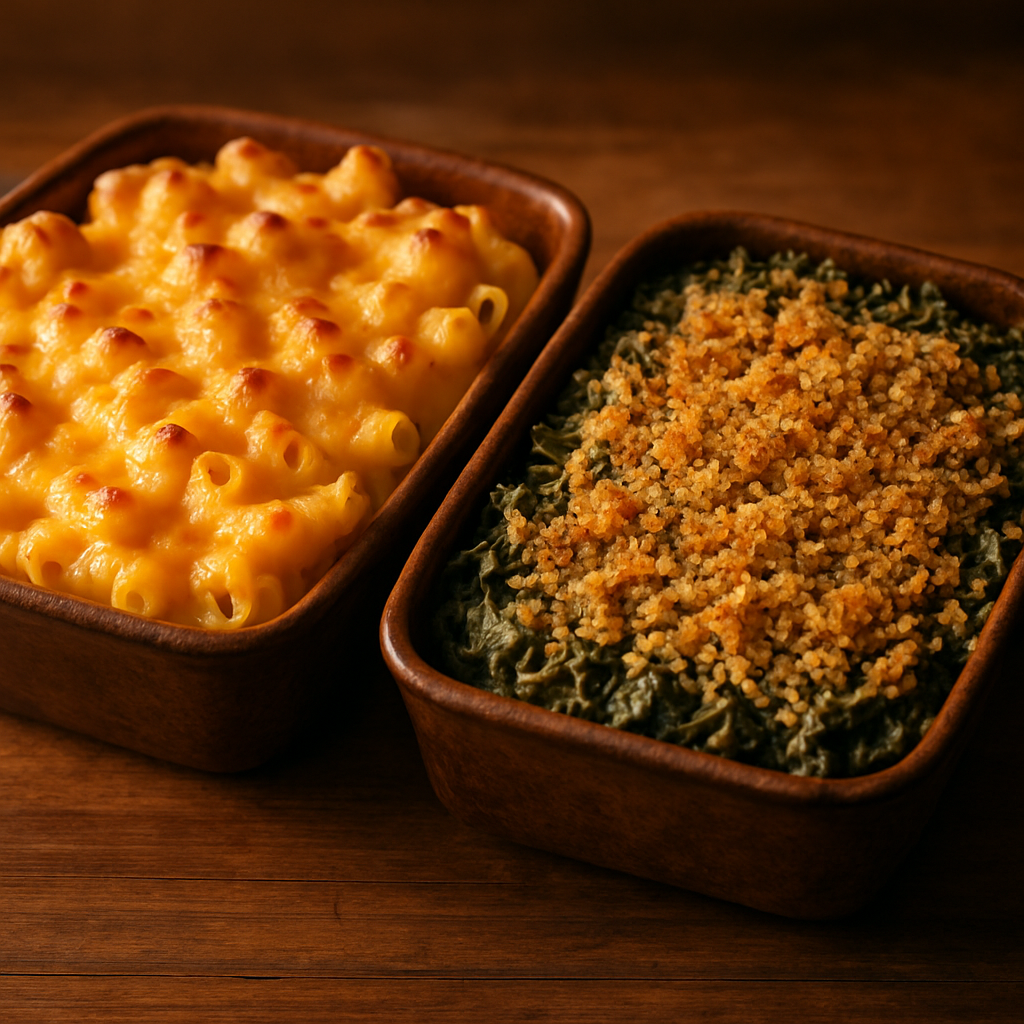
The Discovery
The story goes that in 1882, someone was clearing out the kitchen house of a plantation estate outside Atlanta when they found it: a leather-bound log, its pages yellowed and brittle, wedged into a gap between two stone walls. Inside, rendered in careful, deliberate script, were recipes—dozens of them. Ingredient lists, cooking times, notes in the margins about which preparations fed the most mouths on the least means. And there, among those pages, was this one: a two-part meal that spoke to a particular kind of ingenuity, the kind born when you have to make something nourishing, stretching, and deeply comforting out of what the pantry and garden will allow.
No one knows who wrote it. But the handwriting suggests someone who cooked with authority—someone who knew their craft. The recipe was never published, never credited to anyone by name. It simply existed, tucked away, until rediscovery handed it forward. What survives in that log is a lesson in resourcefulness: how to build a meal that could feed many, that could transform humble ingredients into something worthy of the table, even when resources were scarce.
That meal is this one—creamy, warming, anchored by two casseroles that belong together.
Why This Recipe Works
There's something almost architectural about the way this dish is constructed. The mac and cheese isn't a side dish; it's a foundation—a silken base of two cheeses (sharp cheddar for bite, gruyère for depth) bound together in a roux-thickened béchamel. The smoked paprika and cayenne aren't an afterthought; they're the whisper that says this came from someone who understood how to layer flavor without shouting.
The collard greens casserole, meanwhile, is where the real story lives. Those onions need time—real time—to caramelize until they're deep gold and sweet. This isn't a 2-minute sauté; as the recipe tells you, it's 12 minutes of patient stirring. This is the technique that transforms a vegetable into something complex, something that tastes like it's been tended. Then comes the garlic, the broth, the red pepper flakes that add a slow heat. The greens themselves soften into the broth, becoming tender without collapsing into mush.
And then—the breadcrumb topping. Panko tossed with melted butter and salt, scattered across the top like a finishing hand. This is what happens in the oven: those crumbs toast until they're golden and crisp, giving you texture against all that creamy, tender vegetable.
Together, these two dishes don't compete. They complete each other—richness and earthiness, silkiness and slight crunch, heat and cream.
The Craft
Here's what matters most when you're making this:
The cheese sauce: When you're whisking milk into your roux, do it slowly. This is where most home cooks stumble. A hasty hand means lumps, and lumps mean starting over. Let your whisk do the work, and the flour will release evenly into the milk, thickening as it cooks. You'll feel the sauce go from thin and pourable to something that clings to the back of a spoon—that's your cue.
Once the sauce is thick and off the heat, add your cheese. This matters too: cold cheese hitting a scorching-hot sauce can cause the proteins to seize and become grainy. Off the heat, stirring gently, your cheese will melt into something glossy and smooth.
The caramelized onions: This is not negotiable. Twelve minutes isn't a suggestion—it's the price of admission. You're looking for onions that have surrendered completely, that have collapsed into themselves and turned golden-brown. Stir occasionally so they brown evenly, but don't fuss. They need time to release their moisture, cook it off, and then sweeten.
The greens: Once they hit the skillet with the caramelized onions and broth, they'll cook down significantly. Tender doesn't mean mushy; you want them yielding but still with a little integrity. Taste one at the 8-minute mark. If it's tender enough to break easily between your teeth with no resistance, you're done.
In the oven: Both casseroles bake together at 350°F for 25 minutes. The mac and cheese should be bubbling at the edges—that's how you know the cheese has fully melted into the pasta and everything is hot through. The breadcrumb topping on the greens should be golden and crisp. If it's still pale after 25 minutes, you can give it another few—every oven is different.
Let both rest for 3 minutes before serving. This matters. It lets the structure set slightly, so you're not spooning molten casserole onto plates.
The End of the Story
That recipe in the Atlanta plantation log never made it into a cookbook, never got attributed to a chef or a restaurant. It simply existed—proof that somewhere, someone understood the alchemy of comfort food, the way cream and cheese and greens and onions could come together to tell a story about survival and grace.
You're making that story now. It tastes like home.
Ready to cook it? View the full recipe with step-by-step instructions — and let Mise, your AI sous chef, plan it into your week.