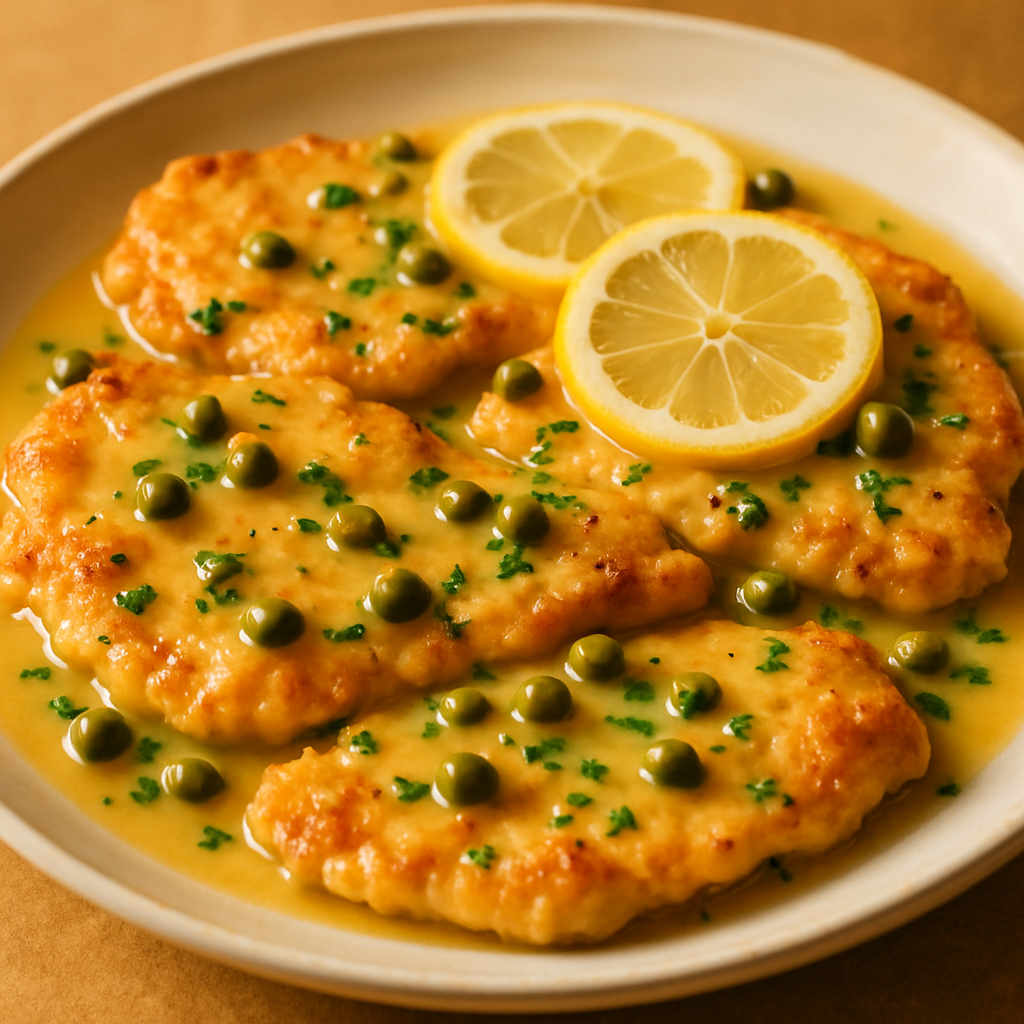
A Recipe Sealed in Memory
The story goes that in a small trattoria near the Spanish Steps in Rome, a widow named Margherita was struggling to feed her staff during the lean years after the war. Flour was precious. Butter was rationed. Lemons—bright, cheerful lemons—grew in the courtyard, and she had those in abundance.
One evening, as the tale is told, she pounded a chicken breast thin as parchment, seared it in the last of her good oil, and deglazed the pan with a splash of white wine and the juice of her lemons. She added capers she'd traded for weeks earlier, a knob of saved butter, and something close to magic happened: the sauce became silken, the chicken tender, and suddenly there was a dish so vibrant and alive that people began coming back not out of habit, but hunger.
That dish was piccata—and the legend says Margherita's restaurant never struggled again.
Whether that's true or not, the recipe endures because it works. It's a masterclass in how to turn simple ingredients into something that tastes both rustic and refined.
The Architecture of a Perfect Sear
Let's talk about what makes this dish sing, starting with the chicken itself.
Pounding the breasts thin—to about a quarter-inch—is not optional. This is where home cooks often skip a step and pay for it. A thin, even cutlet cooks quickly and evenly, turning golden in minutes rather than drying out over a longer pan time. It's also why this dish lands on the table in 30 minutes flat.
Pat your chicken absolutely dry before dredging. Any moisture clinging to the surface creates steam, and steam is the enemy of a proper golden crust. The flour mixture—salt, pepper, all-purpose flour—is your armor. It's thin, it's traditional, and it's all you need. The flour turns golden and crispy, giving you that textural contrast that separates piccata from a poached chicken breast.
When your oil is shimmering—and this matters—you're ready. That shimmer means it's hot enough to sear without sticking. The chicken should hit the pan with a confident sizzle. If it's quiet, your oil isn't hot enough yet. Sear it without moving it around—let it sit there for 5 to 6 minutes until the bottom is deep golden. Flip once, and finish the other side. This is not a dish where you fidget. Let the pan do its work. An instant-read thermometer at 165°F is your signal: the chicken is cooked through, never dry, never undercooked.
The Sauce: Where Brightness Lives
Once the chicken is done, set it aside. Don't wash the pan.
Those browned bits stuck to the bottom—the fond—are liquid gold. A tablespoon of butter, minced garlic, and you're sautéing for just long enough to smell garlic's perfume without letting it burn. Then the white wine hits the hot pan. You're not making a sauce yet; you're deglazing, scraping up all that caramelized flavor with a wooden spoon. Two minutes, and most of that wine cooks off, leaving behind its acidity and depth.
Now the chicken broth and fresh lemon juice come in. This is where the dish gets its character: the acid from the lemon is bright and cutting, the broth is savory depth, and everything simmers gently for 2 minutes. Then off heat—and this is crucial—you finish with the remaining butter, stirred in off the heat. Finishing a sauce off the heat instead of over direct heat gives you that glossy, emulsified finish without breaking. It's the difference between a sauce that coats your spoon and one that slides off into a puddle.
The capers are added last, right before the chicken goes back in. Their salty, briny pop is what makes this dish unmistakably piccata. They're your final punctuation mark.
Coming Home
When you return the chicken to the skillet—just for a minute over low heat—you're not really cooking anymore. You're marrying the chicken back to its sauce, letting them know each other one more time before the plate.
Garlic, lemon, capers, butter: these are the voices in this song, and they've been singing together in kitchens for generations. Parsley and a thin slice of lemon on top aren't decoration. They're a reminder of where the brightness comes from.
Servant a weeknight dinner that tastes like someone who knows exactly what they're doing just walked into your kitchen. Because that's what this recipe is: confidence in its simplest form, built on technique so clean and honest that there's nowhere to hide. No elaborate equipment. No mysterious ingredients. Just the understanding that sometimes the most elegant food is the kind that takes 30 minutes and tastes like it took all night.
Ready to cook it? View the full recipe with step-by-step instructions — and let Mise, your AI sous chef, plan it into your week.