The Day the Pantry Spoke
The story goes that one afternoon, the lead developer of Mise stood in front of an open freezer door, taking inventory. A buffalo hamburger patty sat there—beautiful, ready, waiting. On the counter nearby: a fresh potato, already envisioning itself as a golden fry. The makings of a perfect burger and fries dinner were there. Everything was there. Except one thing: the buns.
Instead of a trip to the store, he reached for his phone and opened Mise. "Hamburger buns," he typed into the recipe prompt. And out came a formula—a real one, grounded in technique and time. Flour, yeast, milk, butter, a little sugar, a little salt. The alchemy of bread.
He looked at what he had on hand. Flour? Yes. Yeast? Yes. Butter and milk? Of course. Even an egg for wash. Sesame seeds? No—but that's what improvisation is for. What followed was a masterclass in why homemade buns matter: why the bun is not an afterthought to the burger, but its partner.
Why This Recipe Works
There's a reason this particular formula shows up in kitchens, generation after generation. It's not precious or fussy; it's honest work.
The structure starts with the dry mix: All-purpose flour, instant yeast, a touch of sugar, and salt. The sugar feeds the yeast and coaxes browning; the salt holds everything together and slows fermentation just enough to build flavor. Mixing these dry first ensures the yeast disperses evenly—no dead spots where dough rises unevenly.
The wet is warm milk and melted butter. That milk (warmed to 110°F—body temperature for yeast) activates the yeast, while the butter brings richness and tenderness. Too cold, and the yeast slugs; too hot, and you kill it. This is one of those sensory checkpoints: if your milk feels too hot on your inner wrist, wait. If it feels body-warm, you're ready.
Kneading—whether by machine or hand—develops gluten, the network that traps gas and gives the buns their structure. Eight to ten minutes of work transforms a shaggy mass into something smooth and elastic, slightly tacky but organized. This is the feel you're chasing: a dough that springs back when you poke it, that holds together.
The Patient Rise
After the first rise (90 minutes at room temperature), the dough doubles. This isn't rushed; it's allowed to happen naturally. When you punch it down and divide it into eight pieces, you're starting fresh with each bun, resetting the fermentation clock.
Shaping is where precision meets gentleness. Each piece becomes a tight, smooth ball—folding the edges under and rolling gently on the work surface creates surface tension that holds everything together. This is why your buns will rise evenly, why they'll dome instead of spread.
The second rise (40 to 50 minutes) is shorter because the dough is already alive with yeast activity. You're watching for them to nearly double again, to look puffy and promising. This is not the time to rush to the oven; underbaked dough yields dense, gummy interiors. Overbaked rise means the buns will sprawl and flatten when they bake.
The Golden Hour
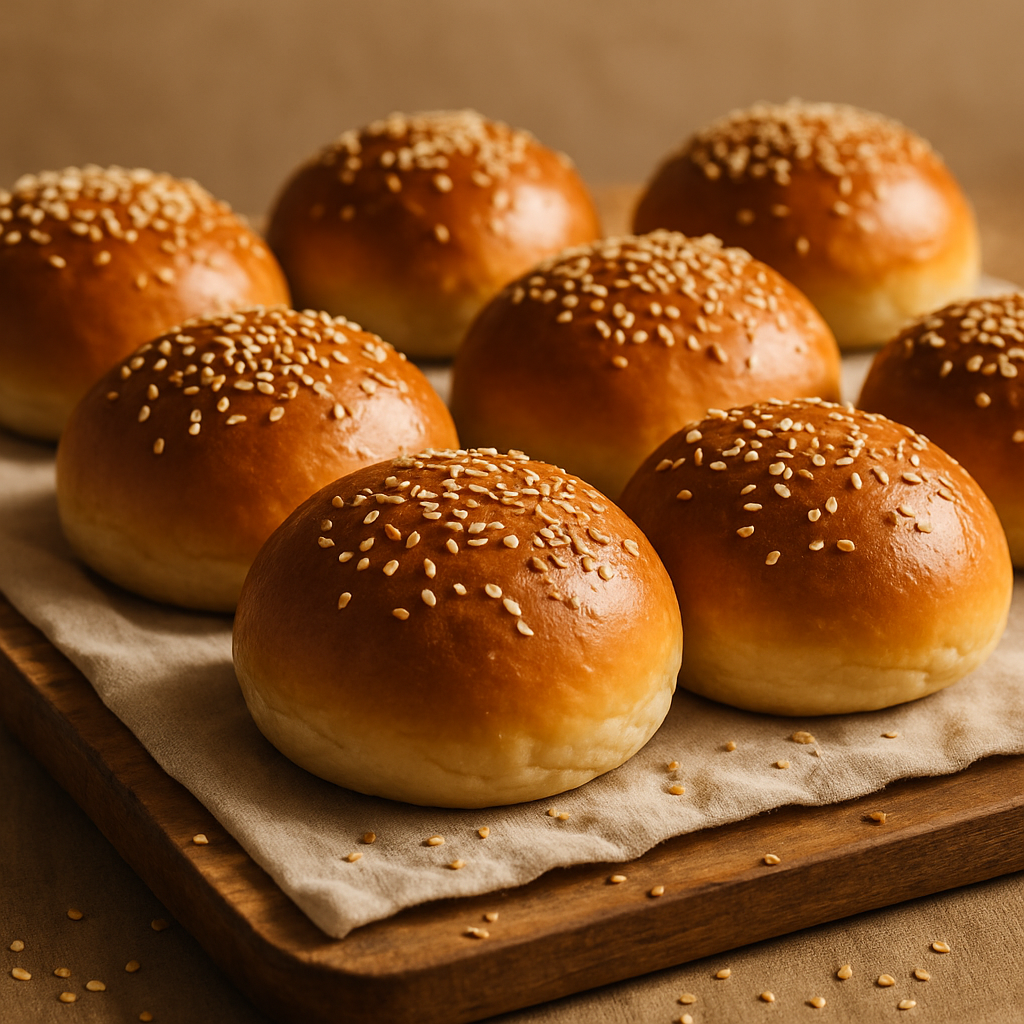
Here's where the egg wash and optional sesame seeds matter: they are the first thing your eye meets, the invitation. Brush the wash gently—you're not drowning the buns, just coating them. If you have sesame seeds, scatter them now. If not, as our freezer-raiding friend discovered, the buns are perfect plain.
Bake at 375°F for 18 to 22 minutes. The thermometer check—190°F in the center—is your insurance. A bun that looks golden but hasn't hit that internal temperature is still too soft inside; another two minutes usually does it. What you're listening for: a sound that's almost hollow when you tap the bottom. The buns should feel firm but still yield slightly to gentle pressure—never hard, never rock-like.
The final brush of melted butter, applied while the buns are still warm, is a small gesture with big returns: it softens the crust just enough to make them the perfect vehicle for your burger.
The Payoff
When that buffalo patty finally meets its bun—soft, pillowy, toasted at the edges, steaming slightly—you understand why homemade matters. The bun doesn't compete; it holds and protects and complements. It's been given time and attention and heat. It tastes like someone cared.
That's the real story. Not the convenience of reaching for a recipe app, though that was the beginning. The real story is that sometimes the best meals come not from perfect planning, but from looking at what you have, asking the right question, and being willing to spend a Friday afternoon proving dough. The freezer had a burger. Your hands and your oven gave it a home.
Ready to cook it? View the full recipe with step-by-step instructions — and let Mise, your AI sous chef, plan it into your week.