The Widow's Rescue
The story goes that in a cramped Roman kitchen in the 1950s, a widow named Signora Giulia faced a crisis. Her family was coming for Sunday dinner—a sacred gathering—and she'd discovered that morning that her carefully planned ragù had scorched beyond saving. The pot sat on the stove, a blackened ruin of ambition and timing.
But Giulia didn't panic. She had something better. In her small pantry sat butter, flour, and milk—the three humble pillars of a sauce she'd learned from her own mother, who had learned it from hers. This wasn't French technique borrowed wholesale; it was Italian simplicity, refined through decades of hands learning how heat and patience could transform the ordinary into velvet.
She melted her butter slowly, worked in the flour with the kind of focused attention most people reserve for prayers, and poured in warm milk in a steady stream while her wooden spoon moved in constant circles. Within twelve minutes, she had something luminous enough to blanket her pasta sheets, creamy enough to bind a lasagna into coherence, elegant enough to make her family forget the scorched ragù entirely.
That sauce—besciamella, as she called it—became the thing they remembered. It's the thing we remember, too. And it begins with understanding why each step matters.
Why Warmth Matters: The Science of Smoothness
Béchamel's reputation for lumpiness is entirely avoidable if you understand the one non-negotiable rule: warm milk into hot roux, never cold into cold.
When you pour cold milk into a flour-butter paste, the proteins in the milk seize and clump around the flour particles. Temperature differential is your enemy. But when you warm the milk first—steaming, fragrant, but never boiling—and whisk it into a roux that's already hot and receptive, the starches in the flour swell evenly, and the proteins dissolve smoothly. It's not magic; it's thermodynamics. Signora Giulia didn't need to know the chemistry. Her hands knew it.
Building the Base: The Roux
Everything begins with equal parts butter and flour by weight—here, four tablespoons each. This 1:1 ratio is the backbone of a proper béchamel, neither too thin nor too heavy.
Melt your butter over medium heat until it foams and turns fragrant. This isn't browning; you're not making a beurre noisette. You want the milk solids to release their sweetness without caramelizing. Watch for that gentle foam and the nutty aroma—usually thirty seconds to a minute.
Add your flour all at once and stir constantly with a wooden spoon. This matters. A wooden spoon gives you control and tactile feedback that a whisk can't; it also prevents lumps from hiding in the corners where a whisk might miss them. Work the flour and butter together for 1–2 minutes, watching for a smooth paste—a roux—that barely holds together.
Don't let it brown. You want a pale, creamy paste. A brown roux would give you an earthier, darker sauce; here, we're after pristine whiteness and purity of flavor.
The Pour: Patience and Whisking
This is where precision becomes theatrical. Have your warm milk ready in a measuring cup.
Remove your roux from heat briefly—just long enough to pour the first splash of milk, maybe a quarter cup. Now whisk vigorously. This is not gentle whisking. You're incorporating milk and flour at the molecular level, breaking apart any nascent lumps before they can take hold. After 15–20 seconds of hard whisking, add another pour of milk and whisk again.
Once you've added about a third of the milk and the mixture is smooth and moving freely, you can return to the heat and add the remaining milk in a slower, steadier stream while whisking continuously. The heat will help it incorporate smoothly.
The Cook: Watching for Thickness
Over medium heat, stirring constantly, the sauce will begin to thicken—slowly at first, then quite suddenly. This takes 8–10 minutes. You're not looking for a specific moment; you're looking for a feeling.
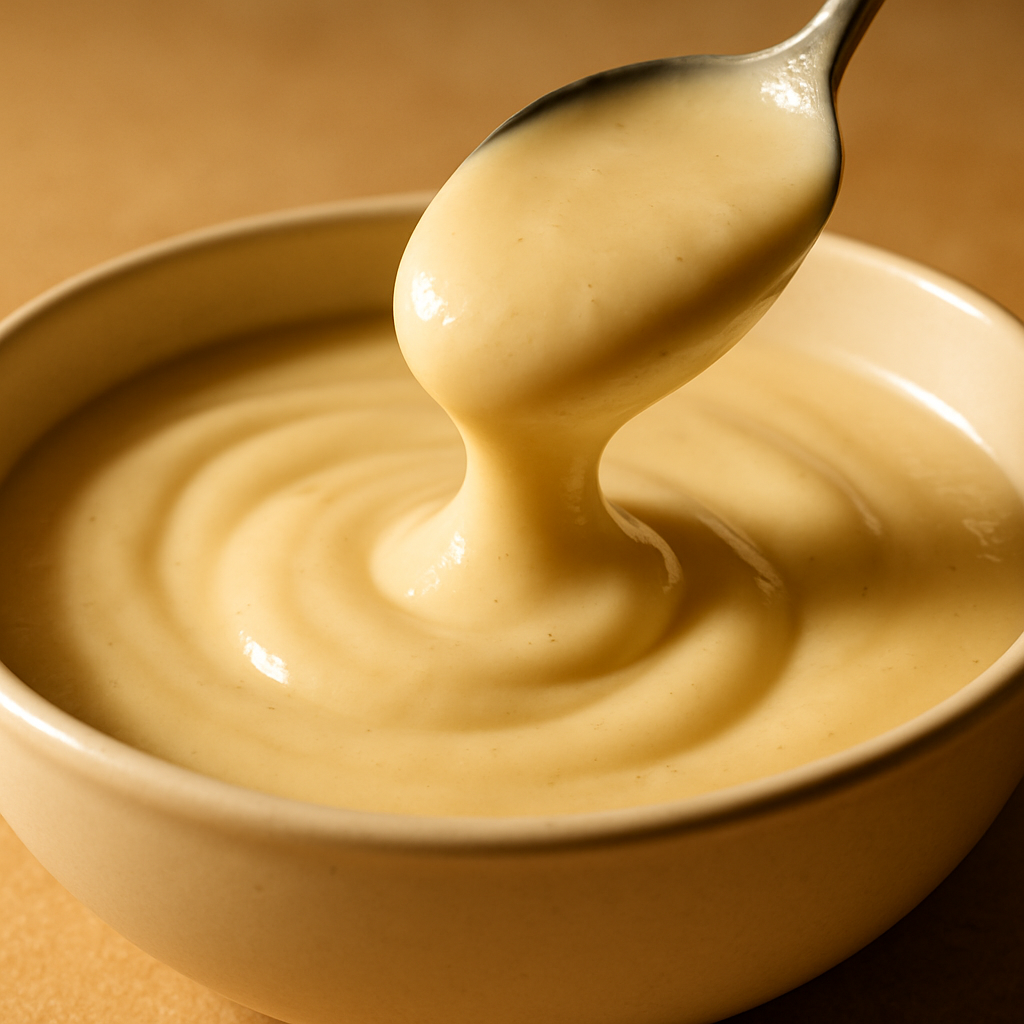
Dip your wooden spoon into the sauce and run your finger across the back. If the line holds and the sauce doesn't immediately flow back together, you're there. It should coat the back of a spoon like heavy cream, glossy and clinging. This is visual and tactile—trust your senses more than a timer.
If it seems too thick—and sometimes, especially in drier kitchens, it can be—add a little warm milk whisked in gradually. If it's still loose after a full 10 minutes of cooking, let it bubble gently for another minute or two. The flour needs time to fully hydrate.
The Finish: Whispers of Seasoning
Remove from heat. Now comes the last grace note: salt, white pepper, and a single, small grating of fresh nutmeg. Not a dusting. Not what you can see. Just enough that someone eating your lasagna tastes something warm and indefinable that makes them pause and wonder what you did.
White pepper, not black, keeps the sauce pristine. Nutmeg—always freshly grated—echoes an old Italian tradition and adds a whisper of earthiness that makes milk taste like itself, but better.
A Final Truth
Press plastic wrap directly onto the surface if you're making this ahead. This prevents the dreaded skin from forming—the flour proteins oxidizing and tightening across the top. When you're ready to use it, stir gently and warm it through, adding a splash of milk if it's stiffened in the fridge.
Signora Giulia didn't have plastic wrap. She had a clean cloth and quick hands. Either way, the principle is the same: béchamel is not a sauce that improves with sitting. It's best used immediately, warm and silken, ready to transform whatever it touches into something that tastes like care.
Ready to cook it? View the full recipe with step-by-step instructions — and let Mise, your AI sous chef, plan it into your week.