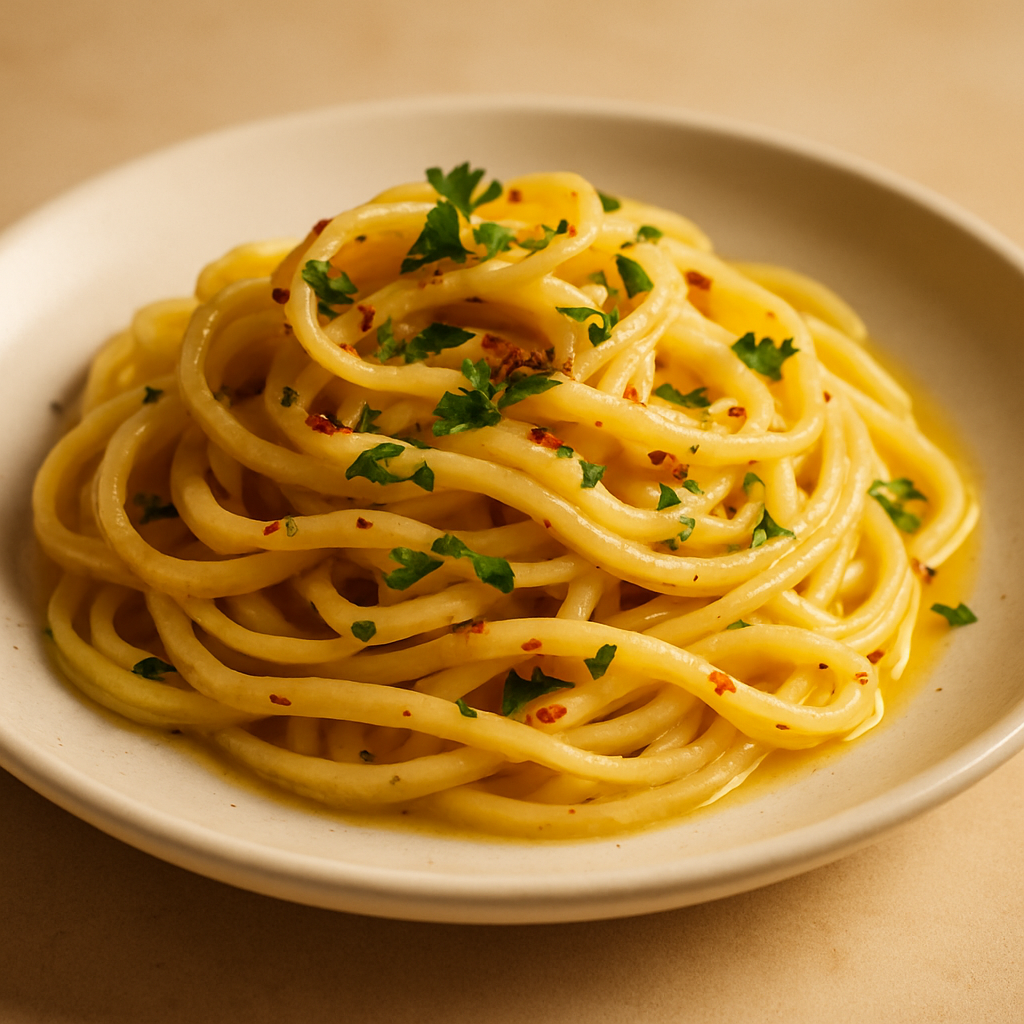
The Beauty of Simplicity
Aglio e olio—garlic and oil—is the soul of Italian home cooking. It's the dish you make when the pantry is nearly bare, when you want to taste the ingredients rather than hide behind them, and when you have time to do things slowly and with care. Pair it with fresh pasta you've made yourself, and you've created something genuinely special: a meal that tastes restaurant-quality but costs almost nothing and asks for nothing fancy, only attention.
Making semolina pasta at home used to be the only way most Italian families ate it. That skill—turning flour, eggs, and water into silken sheets and strands—is worth learning not because it's complicated, but because it connects you to the texture and flavor of real pasta in a way that dried pasta, for all its virtues, cannot quite match. Fresh semolina linguine cooks in minutes, has a tender bite, and carries sauce differently than its dried cousin. And when that sauce is nothing more than warm olive oil perfumed with garlic, every element matters.
The Dough: What's Really Happening
This recipe uses the well method—a traditional Italian approach where flour is mounded on the counter and eggs go in the center. It looks rustic and feels a little dramatic, but it's actually practical: you can feel the dough coming together and add water gradually, only as much as you need.
The semolina flour is key. It has a higher protein content and coarser texture than all-purpose flour, which gives the dough strength and a slightly golden color. You're mixing three eggs with a teaspoon of salt directly into this flour—no elaborate whisking beforehand. The fork does the initial work, breaking up the eggs and beginning to distribute them through the flour. Your hands take over when the dough gets too stiff, and here's where patience matters: knead for the full 8–10 minutes. You're developing gluten, the network of proteins that makes pasta chewy rather than chalky.
The water is your safety valve. Add it in small amounts as you knead. You want a dough that's "firm, slightly sticky"—not a stiff ball and not a wet mess. It should feel elastic and not tear when you stretch a small piece gently. The 30-minute rest that follows is absolutely worth the wait: it lets the gluten relax, making the dough easier to roll and the pasta less likely to snap.
Rolling and Cutting: Patience Over Speed
Whether you use a pasta machine or a rolling pin, the goal is paper-thin sheets. A pasta machine does this work efficiently—roll the dough through progressively thinner settings—and the linguine cutter attachment turns those sheets into even strands. If you're rolling by hand, aim for about 1/16 inch thick, then cut with a sharp knife into 1/4-inch-wide strips. It's slower, but it's honest work, and your hands learn something.
Let the cut linguine dry for 10 minutes on a floured surface or a drying rack. This step is often skipped, but it's important: a little drying firms the surface so the strands don't stick together when cooked, and it helps the pasta cook more evenly. They should be slightly firm but still pliable—not brittle.
The Sauce: Technique in Restraint
While your pasta dries and water comes to a boil, focus on the oil. Heat it gently over medium heat—you want the oil warm and infused, not hot and sputtering. Add the minced garlic and a small pinch of red pepper flakes. Stir constantly for 1–2 minutes until the kitchen smells like garlic but the garlic itself is still pale and soft. This is the most important moment in the sauce: if you let the garlic brown even slightly, it turns bitter and harsh. You want sweet, mellow garlic that's released all its flavor into the oil.
Bringing It Together
Fresh pasta cooks very quickly—2–3 minutes in boiling salted water. Watch for it to float to the surface; it will continue to soften slightly even after that, so don't overcook. Reserve a cup of the starchy cooking water before you drain; that starch is a gift, an emulsifier that helps bind the oil and water into a glossy, light sauce instead of a puddle.
Toss the drained pasta with the garlic oil over gentle heat. Add 1/4 cup of the reserved water and stir until a thin sauce coats each strand. Taste, adjust seasoning with salt and black pepper, and finish with fresh parsley. The parsley adds brightness and color, but it also adds a subtle herbal note that balances the richness of the oil and the sharpness of the garlic.
Why This Works
There are no heavy creams, no proteins to distract, no long cooking times. What you taste is olive oil's fruity depth, garlic's sweetness and heat, the tender bite of fresh pasta, and the clean snap of parsley. This is food that respects its ingredients, and it asks you to do the same. Make the dough without rushing. Let it rest. Roll it thin. Cook the garlic slowly. Taste as you season.
This is a dish that teaches you something with every bite.
Ready to cook it? View the full recipe with step-by-step instructions — and let Mise, your AI sous chef, plan it into your week.