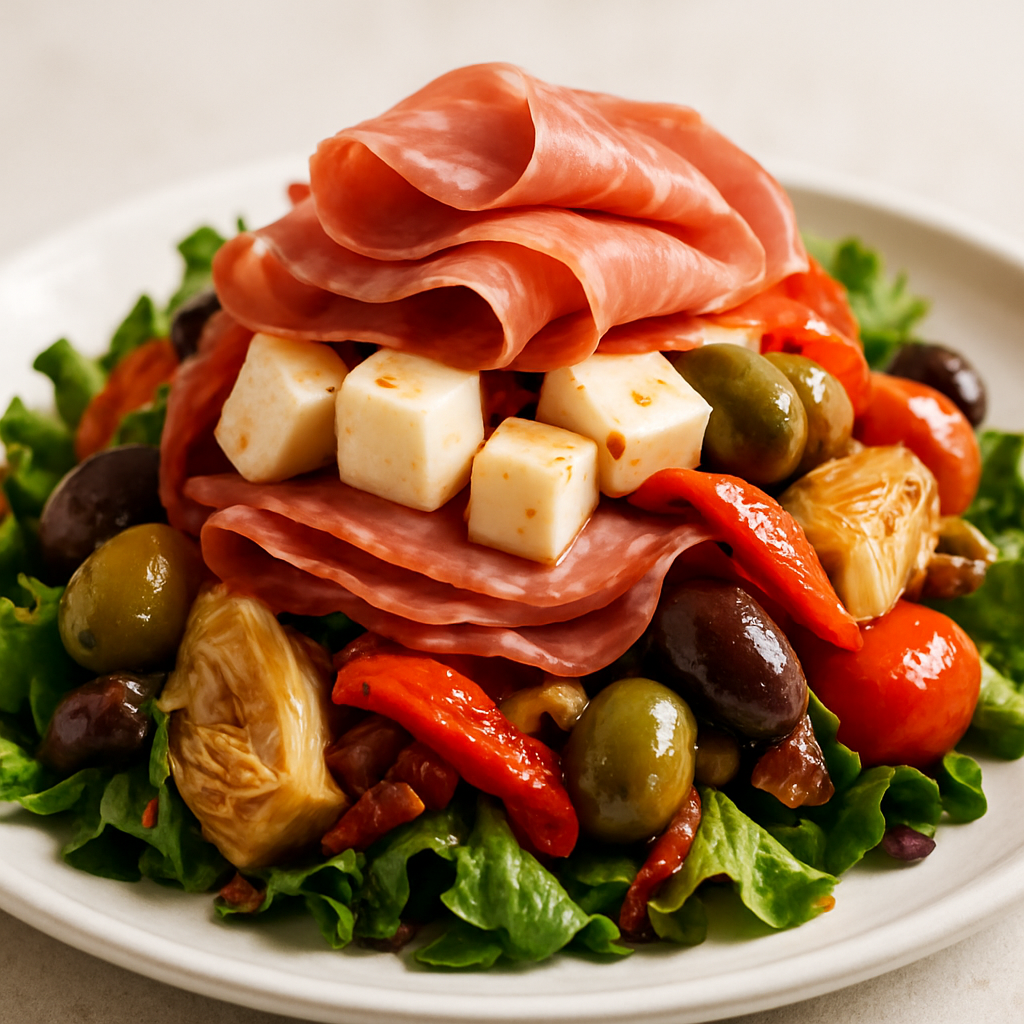
A Salad That Captures the Spirit of Italian Abundance
Antipasto salad sits at the heart of Italian table culture—not as a starter course in the formal sense, but as a composed dish that celebrates the very best of the pantry and market. It's the kind of salad you might find at a family gathering, a casual trattoria, or a picnic in Tuscany: a generous pile of ingredients that each stand on their own merit, yet create something far greater together. What makes antipasto salad special is that it doesn't hide behind dressing or technique. Instead, it invites you to taste the quality of each element—the salt-cure of the prosciutto, the tang of marinated artichokes, the brightness of good olives—while the vinaigrette acts as a gentle conductor, bringing harmony without overpowering.
This recipe is straightforward enough to make on a busy weeknight, yet elegant enough to serve to guests. And because much of the work is assembly rather than cooking, you can prep components ahead and compose the salad just before serving.
Why These Ingredients Matter
The architecture of antipasto salad rests on contrast: soft against crisp, salty against acidic, warm-weather flavors against cool greens. Let's walk through what each element brings.
The foundation. Mixed salad greens provide freshness and structure. They're mild enough not to compete with the bold flavors of cured meat and cheese, yet sturdy enough to hold their own when dressed.
The proteins. Prosciutto and salami are sliced paper-thin and laid across the top—not chopped into the salad, but presented visibly. This isn't just for show; it matters for texture and flavor intensity. Thin slices are silky and melt on the tongue, while thicker pieces would overwhelm. The delicate cure and subtle funk of these meats anchor the whole dish.
The dairy. Fresh mozzarella, cubed rather than shredded, stays tender and creamy. It's a cool counterpoint to the salt of the cured meats and provides a mild, creamy note that balances the acidity of the vinaigrette.
The vegetables. Marinated artichoke hearts and roasted red peppers arrive already cooked and seasoned, bringing depth without requiring heat. Cherry tomatoes add juiciness and brightness. Kalamata olives contribute brininess and umami. Together, these create a complex vegetable landscape that feels substantial.
The vinaigrette. Red wine vinegar is bold enough to cut through the richness of the olive oil and the salt of the cured ingredients. The garlic and oregano anchor it in Mediterranean tradition, while the olive oil carries those flavors and adds silky richness.
The Technique: Emulsification and Assembly
The vinaigrette here follows a classical approach: whisk the acidic and seasoning components first, then slowly incorporate the oil while whisking. This matters. When you add oil gradually while whisking, you're breaking the oil into tiny droplets suspended in the vinegar, creating an emulsion that clings to the salad leaves rather than pooling at the bottom of the bowl. Go slowly—rushing the oil in will cause the vinaigrette to break and separate.
Watch for the dressing to thicken slightly and become creamy-looking as you whisk; that's your sign the emulsion is holding. If at any point it looks separated or greasy, stop adding oil and whisk more vigorously to re-emulsify.
Assembly and Timing
The order matters here. Greens and vegetables go in first, then the prosciutto and salami are arranged on top—not tossed underneath. This keeps them visible and prevents them from breaking apart during the toss. The mozzarella is scattered last, so the cubes stay distinct rather than getting broken or bruised.
When you add the vinaigrette, toss gently but thoroughly. Your goal is for every piece of green to be lightly coated, not for the salad to swim in dressing. This is one reason the recipe serves six: a larger volume of salad means the dressing distributes more evenly and the weight of the ingredients helps toss without crushing delicate components.
Timing is crucial. Dress the salad just before serving. If it sits dressed, the greens will begin to wilt, the mozzarella will soften too much, and the prosciutto will lose its delicate texture. This is a salad best eaten immediately—one of its pleasures is the contrast between cool, crisp greens and the tender meats.
What to Watch For
- Oversalting. The cured meats, olives, and marinated vegetables already carry substantial salt. Taste the vinaigrette before adding it all—you may not need the full half teaspoon of salt.
- Over-dressing. Start with three-quarters of the vinaigrette, toss, taste, and add more if needed. It's easier to add than to remove.
- Wilting. If your greens are at room temperature or the room is warm, chill the bowl and all components before assembling.
Serving Thoughts
This salad is complete as is—a one-bowl meal that feels both light and satisfying. Serve it chilled, with crusty bread on the side to mop up any dressing that pools on the plate. A crisp white wine or a light red pairs beautifully; the acidity of the wine echoes the vinaigrette and doesn't compete with the varied flavors.
You've just made a salad that tastes like an Italian market and the hands of someone who knows how to cook. Enjoy it.
Ready to cook it? View the full recipe with step-by-step instructions — and let Mise, your AI sous chef, plan it into your week.