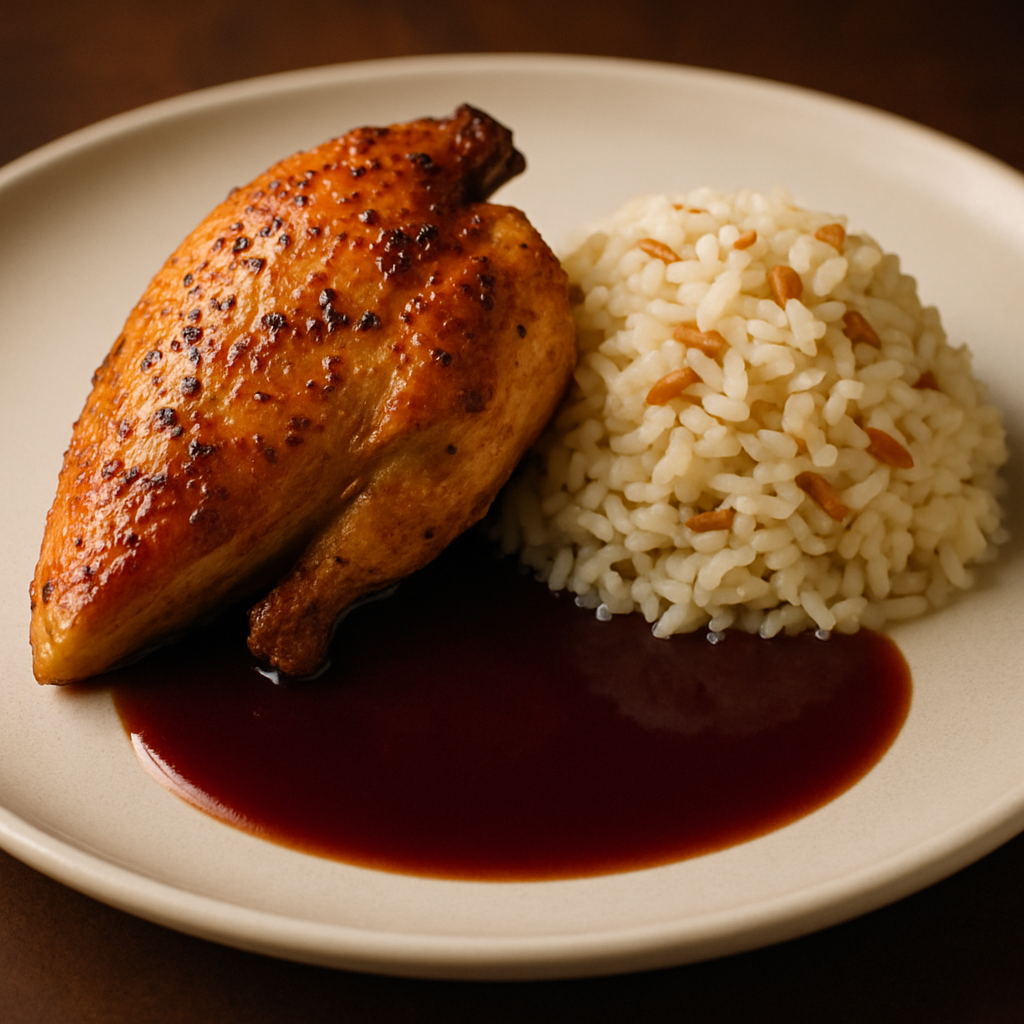
A Classic French Dinner at Home
Roasted chicken is the backbone of French home cooking, and this version shows why. The dish belongs to the tradition of bistro classique—the straightforward, ingredient-driven cooking that defines French comfort food. What elevates it from ordinary is restraint and technique: fresh herbs worked into butter under the skin, a proper rest before carving, and a Marchande de Vin sauce that builds flavor from the roasting pan itself. This is the kind of meal you'd find at a neighborhood table in Lyon or Paris, cooked with care but without fussiness.
Why This Recipe Works
There are three elements working in concert here, and each one matters.
The herb-butter crust. A mixture of thyme, tarragon, parsley, and chervil—the classic French fines herbes—is softened into butter with garlic. This paste goes under the skin, not on top of it. That placement is crucial: it flavors the meat directly and protects the herbs from burning during the high-heat roast. The exterior skin gets only olive oil and seasoning, which allows it to crisp properly. If you've ever had chicken where the skin is either pale or the herbs are blackened and bitter, this technique solves both problems.
The roast itself. Bringing the chicken to room temperature before cooking ensures even heat penetration—the thighs and breasts cook at the same pace. A 425°F oven is hot enough to brown the skin in 45 to 50 minutes without drying the meat. The thigh reaches 165°F while the breast stays tender and moist. This is the magic temperature and timing—not a suggestion, but the point where everything comes together.
The wine sauce. This is Marchande de Vin—literally "wine merchant's sauce"—a bistro classic made from the fond (browned bits) left in the roasting pan. Shallots, white wine, stock, and a generous knob of cold butter emulsified at the end create something rich and silky without cream. The beef marrow adds subtle depth; if you can't find it, more cold butter works fine. A pinch of Dijon mustard and cayenne pepper keep it bright and alive.
The Technique: What to Watch For
Skin-side up, always. This is non-negotiable. The skin is exposed to direct heat, which crisps it. If you flip it halfway, you'll end up with skin that's spotty and rubbery. Skin-side up, untouched, for the full roast.
The herb-butter placement. Slide your fingers between the skin and meat gently—you're creating a pocket, not tearing the skin. Work the butter in evenly, paying attention to the thicker areas (the breast and thighs). Uneven coverage means some parts get more herb flavor than others. Take your time here; it takes maybe two minutes per half.
Resting is not optional. After roasting, the chicken needs eight minutes of rest, tented loosely with foil. During this time, the residual heat finishes cooking the very center, and the juices redistribute throughout the meat. Cut into it too soon and those juices pour out onto the plate instead of staying in the chicken. This is where the difference between dry and moist becomes real.
The sauce emulsion. After you've simmered the stock, the sauce is good but not yet special. The magic happens when you whisk in cold butter off the heat. This creates an emulsion—tiny butter droplets suspended in the liquid—that makes the sauce glossy and rich. Add the butter in pieces while whisking constantly. If you dump it all in and stir lazily, you'll break the emulsion and end up with a greasy, separated sauce. The Dijon mustard and cayenne are there to stabilize that emulsion and add flavor, not to make the sauce spicy.
The rice pilaf. Toast the rice in butter for two minutes before adding stock. This seals the exterior and prevents the grains from sticking together. Use the exact amount of stock called for—18 minutes and no stirring. When you lift the lid, the rice should be tender and every drop of liquid absorbed. If there's still liquid, cover and cook 2 minutes more. If it's dry before 18 minutes, your heat may be too high.
Small Substitutions That Work
If you can't find fresh chervil, use more parsley; the flavor is similar and gentler. If beef marrow is hard to source (it is, in some places), substitute more cold butter—you'll lose a tiny bit of savory depth, but the sauce will be delicious. Dry white wine is essential; don't use cooking wine or anything with added salt.
On the Plate
This is a dinner for two that should feel special, so the plating matters. A mound of rice pilaf in the center, the chicken half placed to the side, skin facing up so that golden crust is the first thing you see. Spoon the sauce around it. A whisper of fresh parsley on top if you like. The chicken should be warm, not piping hot—it's been resting—and the sauce should coat the spoon.
A Final Thought
This dish asks you to practice real technique: emulsification, proper resting, making stock-based sauce. None of it is hard, but all of it matters. The chicken doesn't need to be a special bird or cost a fortune. A good grocery-store chicken, treated with care, becomes something you'd order at a restaurant. That's the whole point of French cooking: not luxury ingredients, but precision and respect for what you're cooking.
Ready to cook it? View the full recipe with step-by-step instructions — and let Mise, your AI sous chef, plan it into your week.