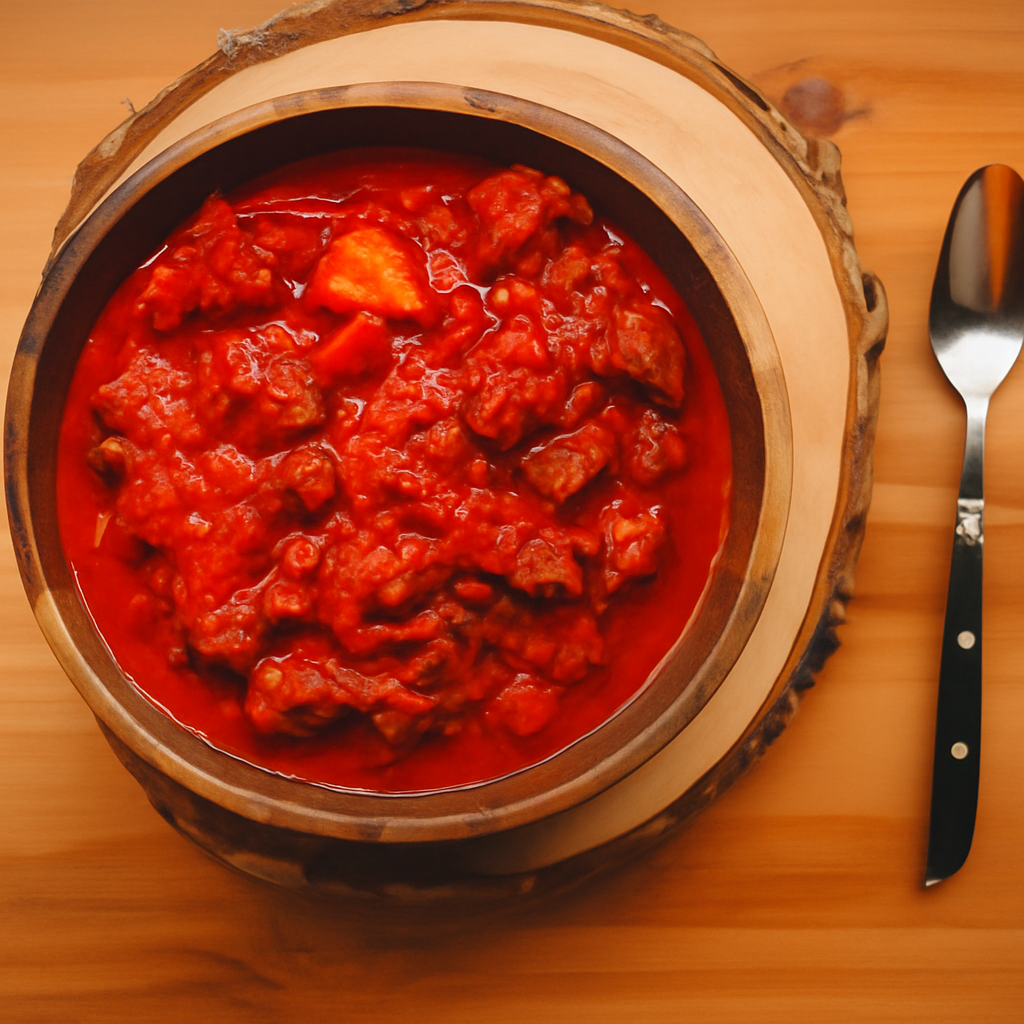
The Pot That Fed an Army
The story goes that somewhere in the vast timberlands of the northern frontier, Paul Bunyan's legendary logging camps needed feeding. Not the tall tales—those came later, embellished by campfire storytellers. But the real work: felling giants of timber, moving mountains of wood, keeping a crew of hungry men fueled from dawn until dark.
According to camp lore, it was Bunyan's head cook—a no-nonsense woman named Maggie who'd followed the logging crews west—who devised what became known simply as "the stew." Not fancy, not precious. Built from what a frontier larder could promise: beef, root vegetables, dried herbs, and broth. The kind of food that could be assembled in one blackened pot over a camp fire, that fed twenty men in shifts, that somehow tasted better the second day.
They say Maggie kept her pot simmering constantly, that loggers would return at dusk with their shoulders aching and their bellies empty, and a bowl of her stew would restore them for another morning. The recipe, simple as it was, became jealously guarded—passed along only to the next generation of camp cooks, whispered like a trade secret through the logging towns of Minnesota and Michigan.
The legend may be half-fiction, but the stew itself? That's all honest work and real technique.
What Makes This Stew True
Cowboy Stew (or logging-camp stew, if you prefer the northern version of the tale) works because it builds flavor in layers, each one essential.
You begin with ground beef browned until deeply caramelized—this is where the savory foundation lives. That initial browning, taking 8 to 10 minutes, isn't just about cooking the meat; it's about creating fond on the bottom of the pot, those caramelized bits that will dissolve into the broth and deepen everything that comes after. Don't rush this. Break the meat apart with the back of your spoon as it cooks, keeping the pieces small and exposed to heat so they brown evenly, not steam.
Then comes the aromatic base: onion, garlic, and tomato paste. The onion softens in the rendered beef fat, sweetening slightly. The garlic blooms for just a minute—enough to release its perfume but not so long that it turns bitter. The tomato paste gets a brief sear in the heat, concentrating its umami punch. These aren't complicated steps, but they're deliberate. Each one is a brick in the flavor wall.
The seasonings—oregano, thyme, paprika, Worcestershire—are the herbs and spices of a frontier kitchen: dried things that kept through winter, that traveled well. Paprika brings both color and a gentle warmth. Worcestershire adds a savory depth that echoes umami without tasting "saucy." Oregano and thyme are assertive but not fussy—they taste like home, like something a camp cook would have hanging in dried bundles.
The vegetables—diced potatoes, carrots, onion—need to be cut into pieces roughly the same size so they cook evenly. This matters. Uneven dice means some pieces turn to mush while others stay hard. Bite-sized is the target: not so small they disappear, not so large they resist the spoon.
The broth, the beef stock, is what carries everything. It's the vessel that lets the beef, the aromatics, the herbs, and the vegetables become one thing—not four separate ingredients, but a unified whole.
How to Know It's Right
Watch the potatoes and carrots. They should be fork-tender after 20 to 25 minutes of simmering, but not falling apart. If you're poking them at the 20-minute mark and they still resist, give it another few minutes. The size of your dice will affect cooking time slightly; smaller pieces will finish faster.
The broth should be visibly thickened by the end, mostly from the starch released by the potatoes. It won't be gravy-thick, but it won't be watery either. If it looks too thin when you're nearing the end, that usually means your potatoes aren't done yet—or you've diced them larger than you realized.
Taste before serving. The seasoning should taste balanced: you should taste the beef, the herbs, the earthiness of the vegetables. If it feels flat, it's usually salt. A half-teaspoon more, stirred in, often wakes everything up. Worcestershire can also help if it tastes like it's missing something indefinable—that savory anchor.
The Last Word
Maggie's stew fed people who'd worked hard and deserved better than scraps. It asked for attention—not hours of it, but real attention: browning the meat properly, timing the vegetables right, tasting and adjusting. That's the whole craft of it. It's one pot, it's simple, but it's made with intention.
That's what made it legend.
Ready to cook it? View the full recipe with step-by-step instructions — and let Mise, your AI sous chef, plan it into your week.