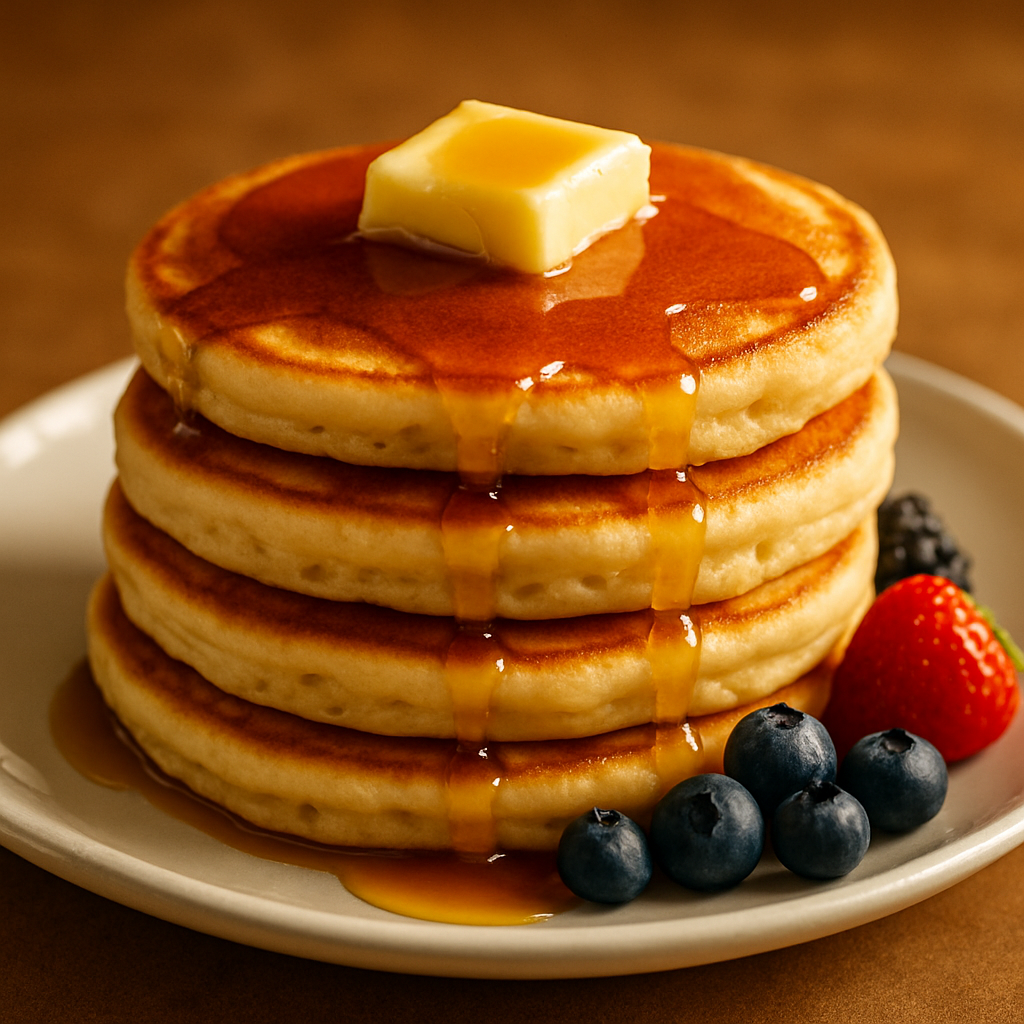
The Heart of American Breakfast
Buttermilk pancakes hold a special place in American breakfast culture—they're the kind of dish that shows up on diner menus, in grandmother's kitchens, and at weekend family tables across the country. What makes them endure is their simplicity and their soul: a tender, slightly sweet crumb with just enough tang to keep them interesting, topped with nothing more than butter and maple syrup.
They're comfort food in its most honest form, and the beauty is that achieving true fluffy, golden pancakes isn't mysterious once you understand the three things working in your favor: chemical leavening, the buttermilk itself, and the discipline of gentle mixing.
The Chemistry That Makes Them Rise
Look at the dry ingredients—flour, sugar, baking soda, and salt—and you're looking at the foundation of lift. The baking soda is the star here. It's not a slow-burn leavening agent like baking powder; it reacts immediately when it meets the acidity in buttermilk. That's why timing matters: you want to get these pancakes on the griddle soon after mixing, while that reaction is still active and creating the tiny bubbles that make pancakes airy.
The buttermilk itself does double duty. It's acidic (that tanginess you taste), which activates the baking soda and also tenderizes the gluten in the flour, giving you that soft crumb instead of a tough one. The eggs act as a binder and add richness, while the melted butter contributes flavor and helps create that golden exterior.
The sugar is modest—just 2 tablespoons for 2 cups of flour—which keeps these pancakes savory enough to let the buttermilk's character shine through. You're not making dessert for breakfast; you're making breakfast.
The Crucial Art of Not Overmixing
This is where most home cooks stumble, and it's worth saying plainly: lumpy batter is your friend. The impulse is strong—we're trained to mix things until they're smooth—but pancake batter is the exception. When you overmix, you develop the gluten in the flour, which makes the pancakes tough and dense. Lumps in the batter will cook out naturally on the griddle, and they'll leave behind tender pockets of air.
So fold the wet ingredients into the dry just until you no longer see streaks of flour. You should see small lumps remaining. This takes maybe 10 seconds of folding. That's it.
Griddle Technique and the Bubble Test
Preheating the griddle matters more than you might think. A cold griddle means the bottoms of your pancakes won't brown properly, and the whole cooking process becomes uneven. Two minutes over medium heat gives you an evenly heated surface—not so hot that the bottoms burn before the inside cooks through, but hot enough to set a golden crust.
The bubbles that rise to the surface of each pancake are your signal. Once the top is covered with bubbles and the edges look slightly set, you'll know the bottom is golden. Flip gently—a single confident turn is better than multiple flips—and give the second side just 1 to 2 minutes. That side won't bubble as much, but it will turn light golden brown, which is what you want. The inside is already mostly cooked from the first side.
One practical tip: if your first batch seems to brown too fast, lower the heat slightly. Every griddle is different, and medium heat might be different on yours than on someone else's. The goal is golden brown bottoms before the insides are overcooked.
Serving with Intention
Make pancakes and serve them warm—this isn't negotiable if you want to experience them at their best. Plate them as they come off the griddle rather than stacking them on a cold plate. The steam that escapes is part of their charm.
Butter and maple syrup are the classic accompaniments, and they're there for good reason: the butter melts into the warm pancakes, the syrup provides sweetness and moisture. But if you have fresh berries, a touch of whipped cream, or a handful of toasted pecans, these pancakes welcome them. The restraint in the batter's sweetness is what makes these additions feel complementary rather than necessary.
Make these once and you'll understand why they've stayed on breakfast tables for generations. They're not fancy, but they're perfectly, confidently made.
Ready to cook it? View the full recipe with step-by-step instructions — and let Mise, your AI sous chef, plan it into your week.