The Soul of Louisiana Cooking
Gumbo is the heart of Cajun and Creole cooking—a dish that tells the story of Louisiana's cultural crossroads. Born from French technique, African ingredients, and Native American knowledge, gumbo is simultaneously humble and magnificent: a one-pot meal that feeds a family or a crowd with the kind of deep, complex flavor that only comes from patience and respect for process.
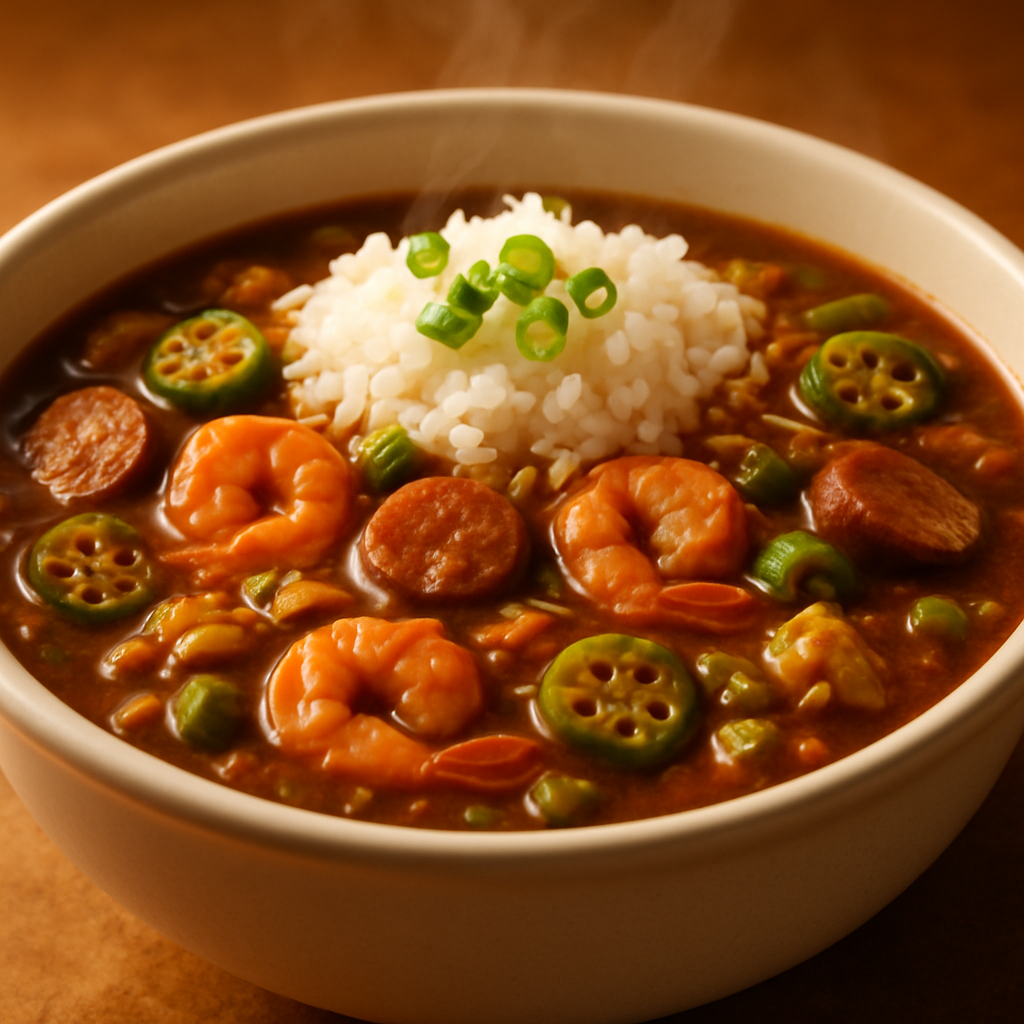
What makes gumbo special isn't a single ingredient; it's the foundation. A proper gumbo begins with its roux, continues with the holy trinity of onion, celery, and bell pepper, and builds from there. This seafood and andouille version is a celebration of what the Gulf provides: briny shrimp and crab, smoky sausage, and the gentle thickening power of okra.
The Roux: Where Everything Begins
If you've never made a dark roux before, this recipe is your invitation to learn one of cooking's most rewarding techniques. A roux—equal parts fat and flour cooked together—is the thickener and flavor base for nearly every gumbo. But this isn't a quick blonde roux. You're building a dark chocolate roux, and that transformation is where the magic happens.
Here's what matters: equal parts oil and flour, medium-high heat, and constant, patient stirring for 8 to 10 minutes. You'll watch the mixture go from pale tan to golden to a rich, deep brown. The deeper the color, the more nutty and complex the flavor—but cross the line into black, and it's burnt and bitter. Watch the color, not the clock. The roux should smell toasty and warm, never acrid.
This is where many home cooks stumble: either they rush and end up with an insufficiently colored roux (lighter roux, lighter flavor), or they let their attention wander and end up with burnt flour. Stay present. Use a whisk and keep moving. It's only 10 minutes.
The Holy Trinity and Aromatics
Once your roux reaches that deep chocolate hue, you'll add the diced onion, celery, and bell pepper—the holy trinity that's foundational to Louisiana cooking. These vegetables release their moisture and soften, clinging to the roux and beginning to caramelize. This is where umami deepens and the gumbo starts to smell like home.
The andouille sausage comes next. This smoked, spiced pork sausage is essential to the dish's identity; it renders fat, seasons the broth, and adds both smokiness and textural contrast. If you can't find andouille, don't substitute it with a mild sausage—the smoke and spice are too important. Look for it at a good grocery store, butcher, or online.
Building the Broth
When you pour in the stock, do it slowly while stirring constantly. This prevents lumps from forming in the roux—lumps mean pockets of unincorporated flour that will mar the silky texture you're after. Bring the pot to a gentle boil, then reduce to a simmer.
The spices—thyme, oregano, cayenne, paprika, and black pepper—are layered in after the stock. This timing allows them to bloom and distribute evenly throughout the liquid rather than settling on top. Cajun seasoning is warm and earthy, with a gentle heat from cayenne that builds rather than shouts. Taste as you go; cayenne especially can be adjusted to your preference.
The Stars: Okra and Seafood
Okra is both ingredient and thickener. Sliced into rounds and simmered in the gumbo, it releases a natural mucilage that further thickens the broth and adds a subtle, grassy note. Simmer it for 8 to 10 minutes—long enough to tenderize but short enough that it holds its shape and doesn't dissolve into the pot.
The seafood goes in last, and this is crucial: shrimp and crab cook quickly and will toughen if overcooked. Shrimp are done the moment they turn pink and opaque throughout—usually just 4 to 5 minutes. Crab meat is already cooked (if you're using lump crab, which is typical), so it just needs warming. Stir gently to avoid breaking up the crab.
Technique and Sensory Cues
Taste before serving. The gumbo should be rich and slightly spicy, with each element—the roux, the holy trinity, the sausage, the seafood—distinct but harmonized. If it tastes flat, salt is your friend. If it needs more heat, a pinch of cayenne or a splash of hot sauce will brighten it.
Serve over white rice, which absorbs the flavorful broth and provides a neutral bed for the seafood and sausage. A scatter of fresh green onion at the end adds brightness and a gentle onion bite that balances the richness.
A Recipe Worth Your Time
Gumbo rewards attention. It's not complicated, but it does ask you to be present—to watch the roux, to layer flavors deliberately, to respect the seafood's delicate timing. The result is a dish that tastes like it took hours, when really it's just under two hours from start to finish. Make it once, and you'll understand why it's beloved across generations and tables.
Ready to cook it? View the full recipe with step-by-step instructions — and let Mise, your AI sous chef, plan it into your week.